Milan Shah
I'm an ECE student with plans to pursue medicine and medical technology. Currently, I'm building at the intersection of AI, robotics, and hardware. My goal is to use deep tech to solve physical, real-world problems—especially in healthcare. If you're a founder or engineer building useful tech that helps people, let's talk.
My Work
Schema
AI-native EDA suite for schematic and PCB design
An AI-native electronic design automation (EDA) suite for schematic and PCB design, built as a high-performance C++/Qt desktop application. Schema runs interactive canvas rendering natively while delegating spatial reasoning and component selection to a system of specialized, Gemini-powered AI agents. A fast C++ layer handles real-time visual feedback, dynamic ratsnest generation, interactive trace routing, and native parsing of both KiCad and Altium libraries. A semantic multi-agent layer handles design intent: users describe their circuit in natural language, and the agents collaboratively evaluate the request before returning structured XML layout directives that the core engine applies directly to the board. Schema's architecture explores the intersection of generative AI and hardware engineering, tightly coupling non-deterministic reasoning with a precise, industrial-grade CAD environment.
Cyto
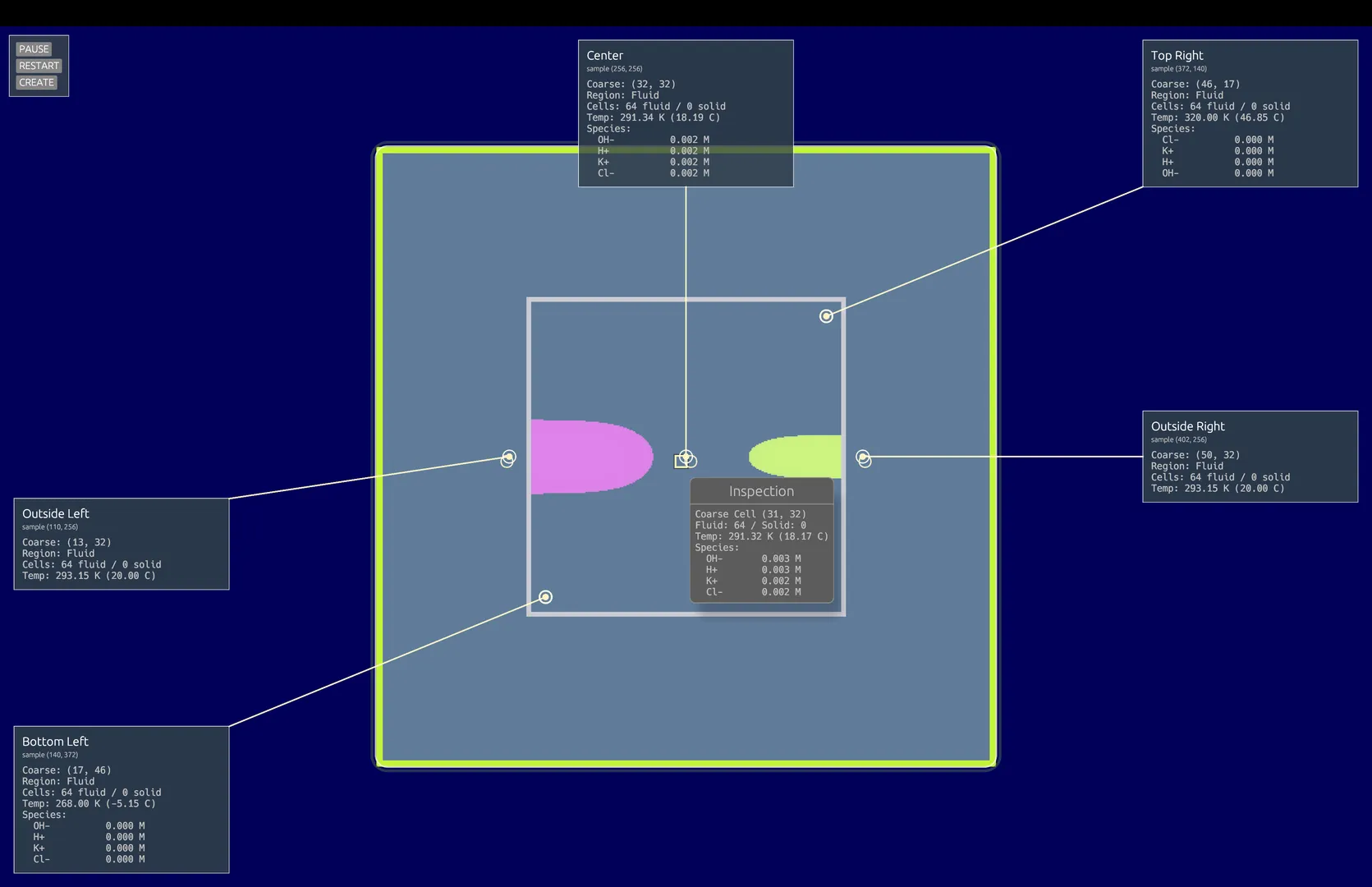
GPU chemical-transport sandbox
A GPU-accelerated 2D chemical-transport sandbox that runs fine-grid simulation on the GPU while delegating semantic reasoning to Lean 4, built as pre-production R&D for a video-game concept. A fast layer handles multi-species transport, explicit diffusion, thermal transport, and enzyme entities on a dense [species][cell] buffer through Vulkan compute shaders. A semantic layer in Lean handles rule selection and reaction kinetics: roughly once per simulated second the engine serializes a coarse snapshot to JSON, sends it to Lean for evaluation, and applies the returned reaction directives back to the GPU buffers. It supports solid geometry and material masks, charge-correction heuristics, membrane leak channels, Michaelis–Menten and mass-action kinetics, and six built-in scenarios.
FPGA WallHACKS
Through-wall radar security system
An FPGA-based security system that detects human presence and movement through walls without line of sight. A Grove BGT24LTR11 24 GHz Doppler radar feeds raw signal data to a Nexys A7 Artix-7 FPGA for real-time signal processing and feature extraction, while a Jetson Nano runs machine-learning inference to classify the radar signals into security events. Pairing FPGA preprocessing with GPU-accelerated edge inference keeps the system low-power and privacy-preserving, sensing motion with radar rather than cameras.
RL Table Tennis Robot
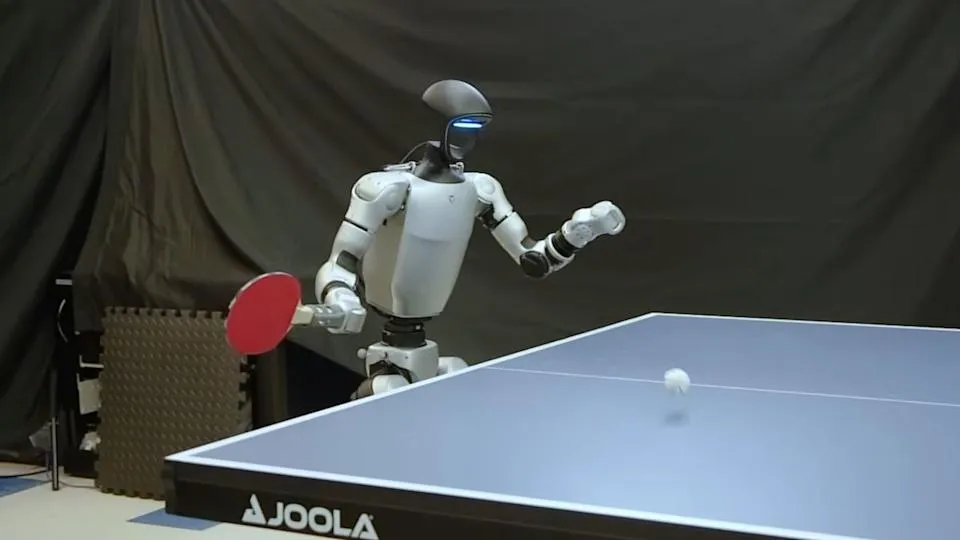
Humanoid robot that learns table tennis with RL
Control software for a humanoid robot that learns table tennis through reinforcement learning. The agent is trained with Proximal Policy Optimization on the SmolVLA dataset inside NVIDIA's Isaac Lab and LeggedLab, reaching a 91% return rate in simulation and 63% in the real world. The approach is being extended to other racket sports including tennis, pickleball, and badminton.
Humanoid Robot Club
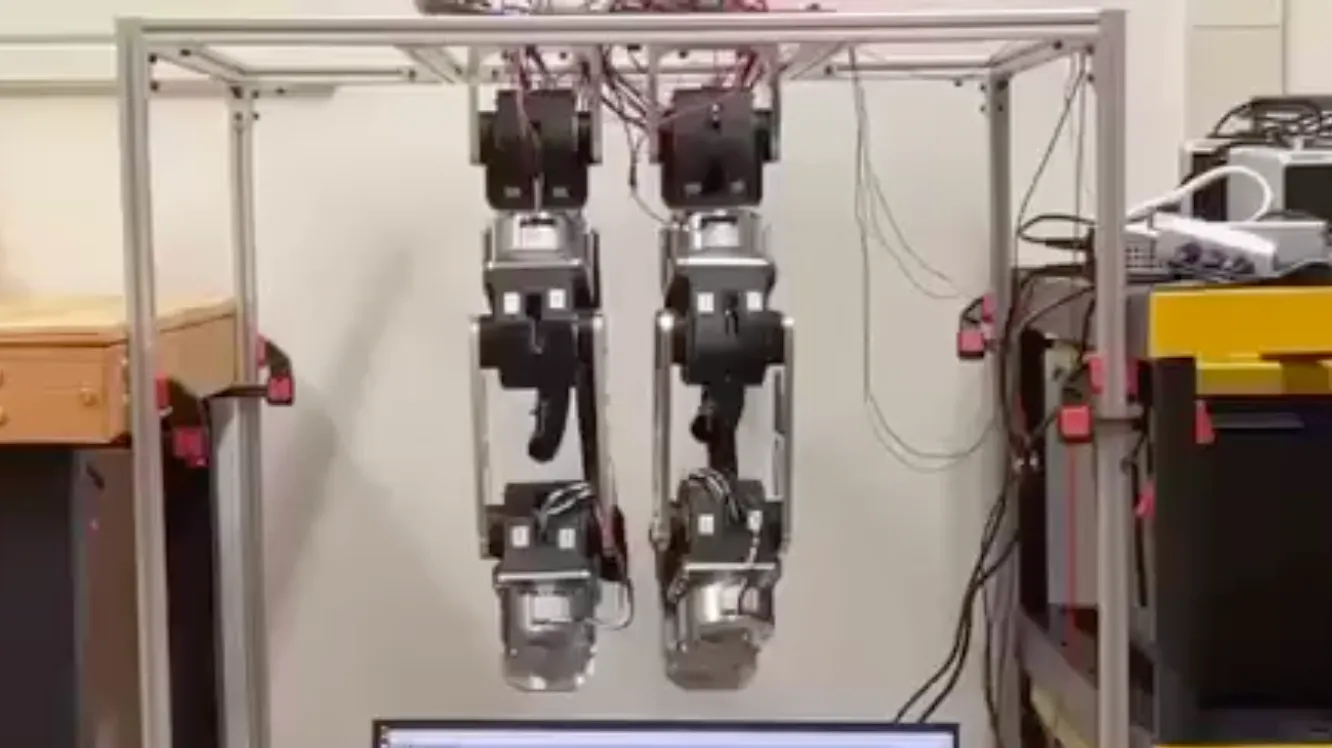
Upper-body control for a humanoid robot
Software for the upper extremities — arms, wrists, and hands — of a humanoid robot developed in Purdue's VIP Humanoid Robot Club. The work uses MuJoCo for simulation and PyTorch with YOLO for autonomous perception and control, with the upper-body systems built to integrate into the full-robot simulation. The long-term goal is training the robot to complete complex, human-like tasks for space applications.
FPGA Raytracer
Real-time hardware-accelerated 3D raytracer on FPGA
A real-time hardware-accelerated 3D raytracer built from scratch in SystemVerilog and deployed on a Xilinx Artix-7 FPGA, rendering directly to a physical VGA display at 640×480 @ 60 Hz without microcontrollers, external memory, or framebuffers. A custom 32-bit Q16.16 fixed-point arithmetic library handles all 3D vector operations natively in hardware, leveraging DSP48 slices for single-cycle multiplication and eliminating floating-point logic entirely. The raytracing algorithm was mathematically reformulated to accept un-normalized ray vectors, bypassing inverse-square-root modules and all division operations from the datapath. The resulting deeply pipelined architecture — spanning ray generation, ray-sphere intersection, and Lambertian diffuse shading — processes one pixel every 4 clock cycles, sustaining 18.4 million rays per second at 100 MHz. The full pipeline was verified with SystemVerilog testbenches against fixed-point overflow boundaries before synthesis and physical deployment via Vivado.
Prosthetic Simulation
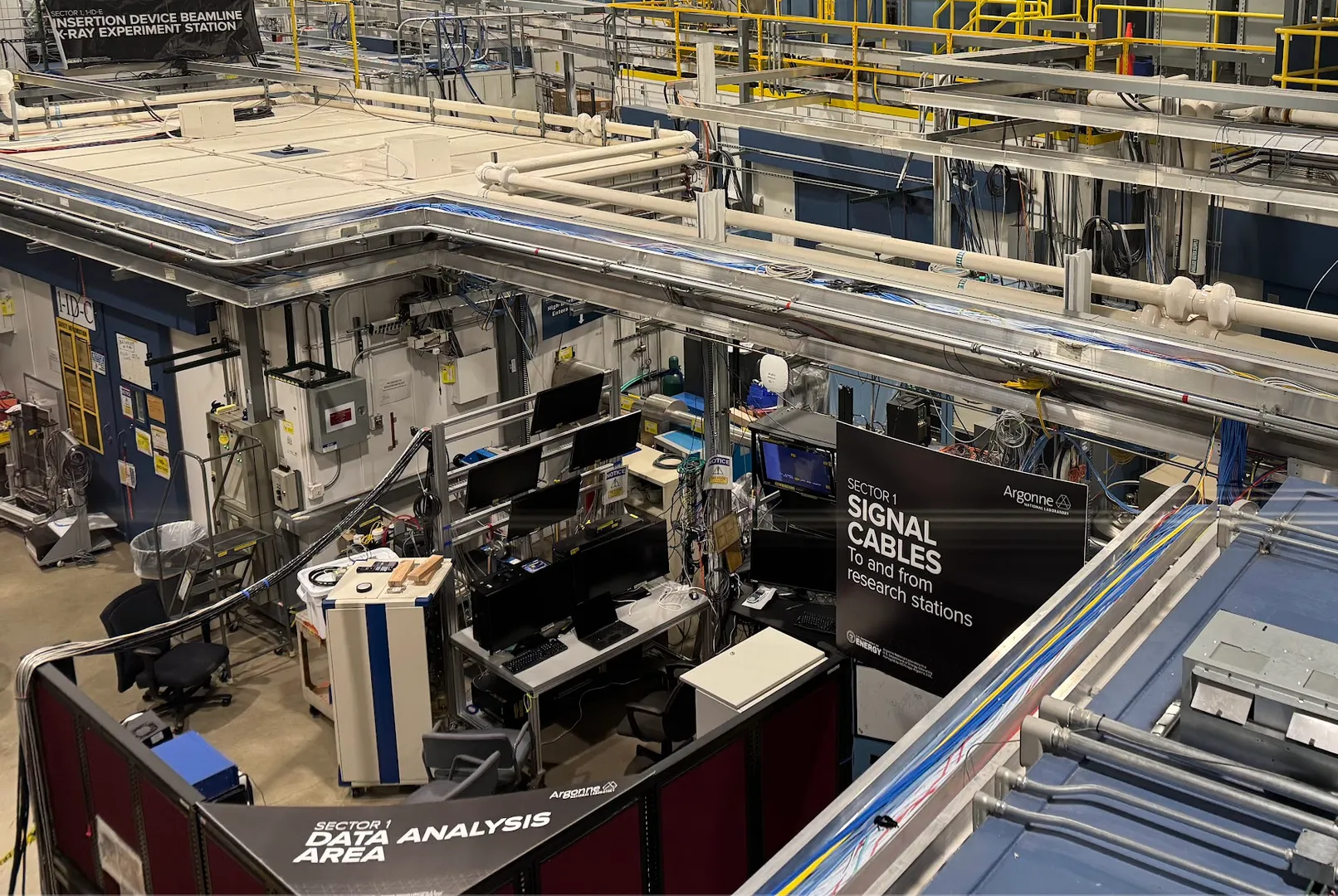
Synchrotron research for prosthetic materials
Synchrotron-science research conducted at Argonne National Laboratory and the Northwestern University Prosthetics-Orthotics Center to evaluate common and underutilized materials for prosthetic development. Using the Advanced Photon Source beamline, the project collects X-ray diffraction and fluorescence data from samples cycled under stress and strain to physically simulate years of prosthetic wear. That data feeds degradation models that estimate material lifespan over time, informing which materials are viable for future prosthetics.
Party Planner
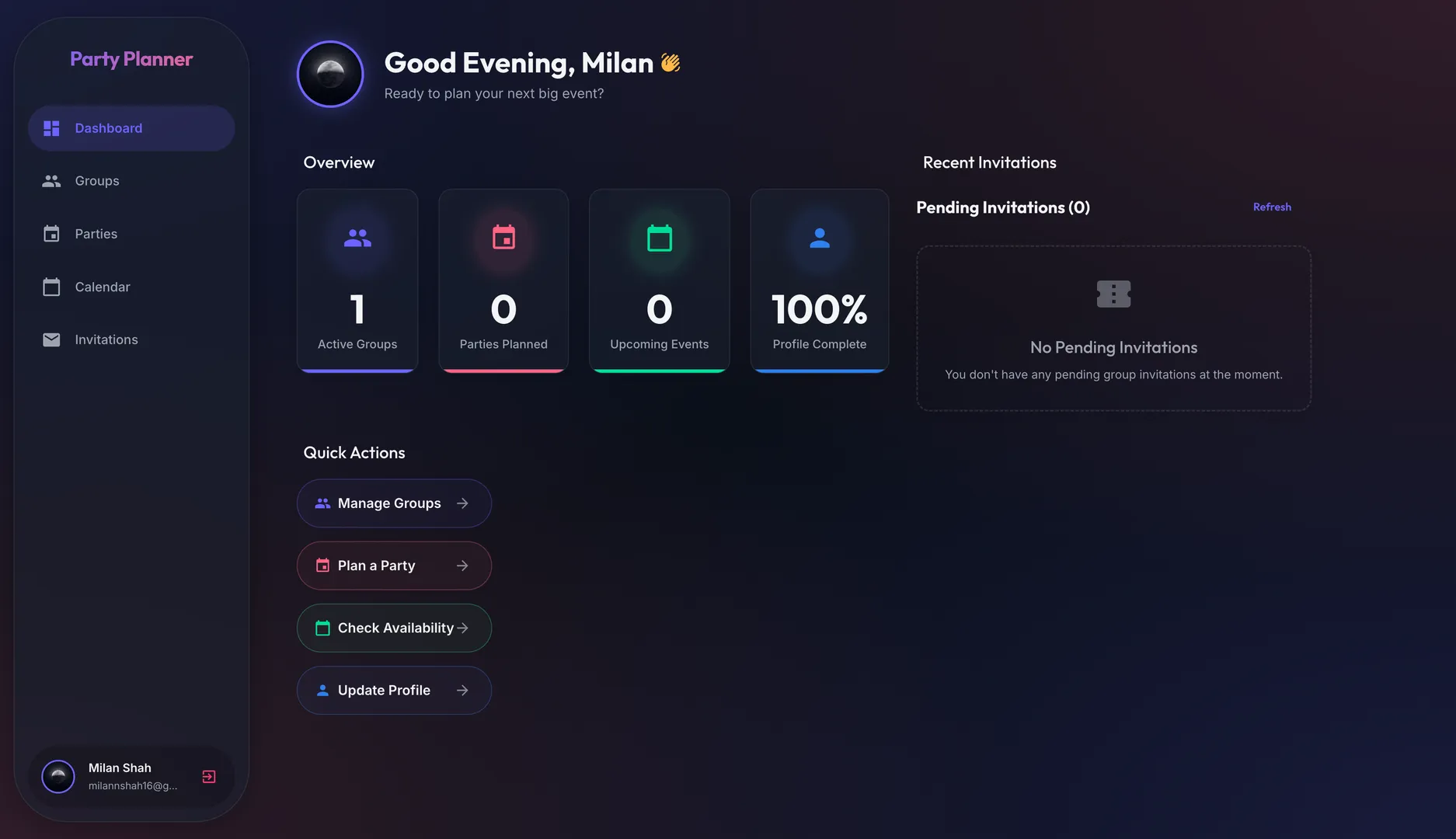
Full-stack event coordination platform
A full-stack web app for social event coordination, built to remove the friction of scheduling and managing group events. Party Planner pairs automated group management with conflict detection that flags overlapping availability, sends personalized HTML email invitations, and tracks invitation status on a real-time dashboard. The frontend is React and Material-UI; the backend runs on Node.js, Express, and Firebase Firestore, with Nodemailer handling delivery and optimized synchronization keeping client state current.